
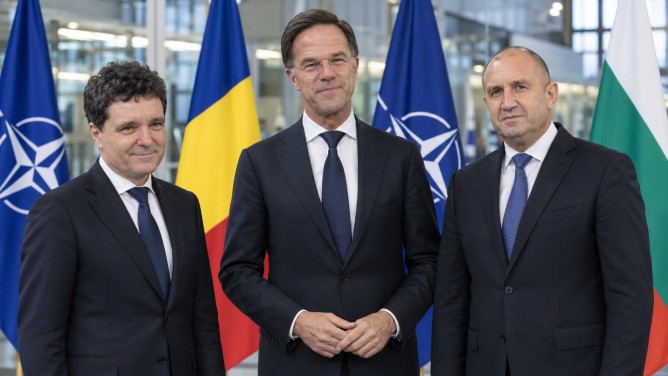
In response to recent attacks on commercial vessels in the Black Sea, NATO is intensifying its security measures in the region. On October 15, NATO Secretary General Mark Rutte held discussions in Brussels with Romanian President Nicușor Dan and Bulgarian Prime Minister Roumen Radev. The talks focused on enhancing maritime security following incidents that have heightened regional tensions and threatened international trade routes.
The meeting came on the heels of two notable incidents in Romanian waters. On October 14, the fuel tanker Yara J, flying the Comoros flag, caught fire near the port of Sulina, necessitating an urgent evacuation of its crew. The next day, a fire was reported on the San Marino-flagged vessel Wine Trade, resulting in eight of its 12 crew members going missing. Bulgaria, too, has faced similar threats, with four vessels attacked in its exclusive economic zone on October 6 and 13, leading to the sinking of two ships and several fatalities.
Amid these challenges, Bulgarian officials have speculated on potential Russian involvement, although Prime Minister Radev noted that there is currently insufficient evidence to substantiate these claims. Emphasizing the need for collective vigilance, Radev called for enhanced monitoring and counter-drone capabilities through partnerships with NATO and the European Union.
Romanian President Dan underscored the gravity of the situation, warning that continued attacks on commercial shipping pose significant risks to seafarers, international trade, and critical infrastructure. He advocated for closer cooperation with Bulgaria to bolster regional defenses and ensure the safety of maritime navigation.
As NATO strengthens its eastern flank, Rutte reiterated the alliance’s commitment to collaborate with Romania, Bulgaria, and other member states, adjusting defense strategies as needed to safeguard the Black Sea’s commercial shipping lanes. The proactive stance aims to maintain stability and secure passage through this strategically important region amid ongoing geopolitical tensions.