
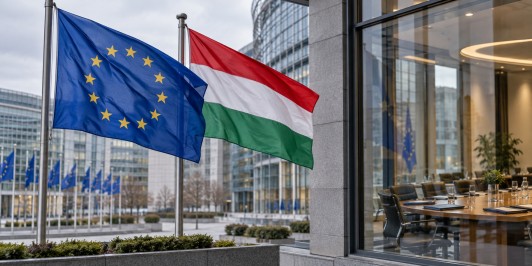
The European Commission has proposed unlocking €4.2 billion in previously frozen cohesion funds for Hungary. This move also suggests reinstating full access for Hungarian students and researchers to the Erasmus+ and Horizon Europe programs. This proposal comes after Hungary implemented reforms addressing rule-of-law concerns that had previously affected the EU budget. These reforms include changes in public procurement processes, strengthened anti-corruption measures, clearer conflict of interest regulations, and improved prosecutorial effectiveness.
However, the proposal is not yet final. It requires approval from the Council of the European Union, which has a month to make a decision. Until the Council gives its nod, the funding restrictions placed on Hungary in 2022 remain in effect. The €4.2 billion represents only a portion of the EU funds still withheld from Hungary. Other cohesion funds continue to be blocked under different conditions, and Hungary’s access to recovery funds is undergoing a separate evaluation process.
The decision to release these funds and restore program access is significant, considering the broader context of EU-Hungary relations, where financial restrictions have been used as a tool to ensure compliance with EU norms and standards. The Commission’s recent proposal indicates a positive assessment of Hungary’s efforts to rectify the issues that led to the initial imposition of these measures.
As the Council deliberates on this proposal, the outcome will be closely watched, as it could set a precedent for how the EU manages compliance issues with member states. The restoration of funds and program access could bolster Hungary’s educational and research sectors, providing crucial support to students and researchers who have faced limitations due to the funding freeze.
Ultimately, the European Commission’s proposal signifies a potential shift in EU-Hungary relations, contingent on Hungary’s continued adherence to the reforms and the Council’s approval. The unfolding developments will be crucial in determining the future dynamics between the EU and Hungary, particularly in the realm of financial aid and program participation.