
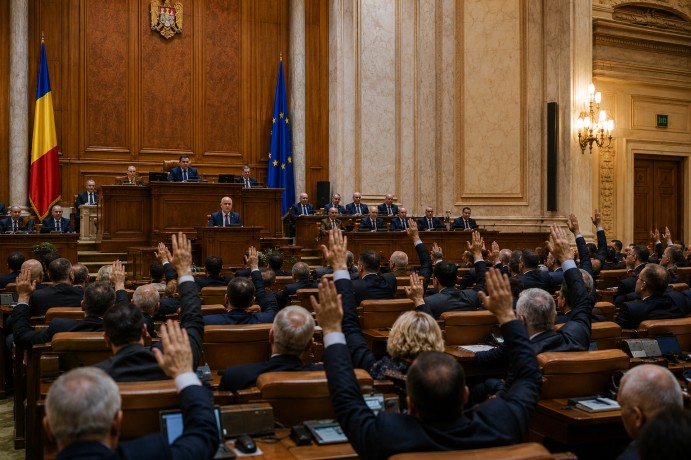
Romania remains mired in political uncertainty after its Parliament turned down the proposed government led by Prime Minister-designate Adrian Vestea. This rejection prolongs the deadlock, leaving the country without a new administration for the sixth week in a row. Vestea secured only 189 votes, falling short of the 233 required for parliamentary approval. Despite the setback, he expressed that he had exerted all efforts to assemble a government capable of resolving the ongoing political instability.
With Parliament’s decision, the responsibility now falls on President Nicușor Dan to nominate another prime minister-designate. This individual will have a 10-day timeframe to form a cabinet and seek Parliament’s backing. Romanian law stipulates that if two successive nominees fail to gain parliamentary support within a 60-day period, Parliament may be dissolved, paving the way for early elections.
The political landscape in Romania is marked by deep divisions, complicating the formation of a majority government. Analysts predict that a minority administration might be the most feasible solution given the current circumstances. The prolonged political standoff unfolds as Romania grapples with several pressing economic issues, such as a significant budget deficit and the imperative to secure recovery funds from the European Union.
The inability to establish a stable government comes at a critical time for Romania, as it faces economic challenges that require decisive leadership. The delay in forming a new administration not only affects internal governance but also has broader implications for the country’s ability to address its fiscal issues and benefit from EU support. As the political impasse continues, all eyes are on President Dan’s next move in this unfolding political saga.