
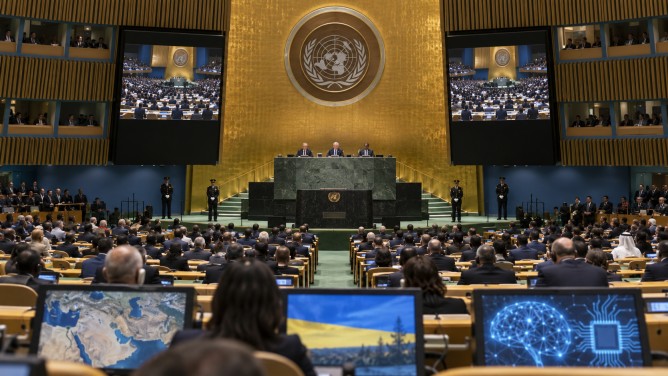
As global tensions persist, the 81st session of the United Nations General Assembly convenes in New York, drawing world leaders to tackle pressing issues like the conflicts in the Middle East and Ukraine, the rapid advancement of artificial intelligence, and the overarching future of international cooperation. This annual gathering provides a platform for high-stakes diplomatic discussions, with the general debate scheduled between September 22 and 26, and concluding on September 28.
Amid these discussions, U.S. President Donald Trump is poised to deliver an address, while leaders are expected to engage in behind-the-scenes negotiations over ongoing international conflicts. Notably, Ukrainian President Volodymyr Zelenskyy plans to meet with Trump, emphasizing the importance of the Ukraine conflict on the assembly’s agenda. The war in Ukraine remains a critical concern, with discussions likely to focus on its humanitarian impact and broader repercussions on global food and energy security.
The Middle East conflict, particularly involving Iran, will also be a focal point, influencing regional stability, energy supplies, and diplomatic relations. Iranian President Masoud Pezeshkian and Israeli Prime Minister Benjamin Netanyahu are among the key figures expected to address the assembly, highlighting the geopolitical intricacies at play.
Meanwhile, the emergence of artificial intelligence as a transformative force in global industries has captured the attention of UN Secretary-General António Guterres. He has urged for international cooperation and the establishment of common safeguards to manage AI’s rapid development. The UN’s advisory body on AI governance underscores the organization’s proactive stance in navigating technological advancements.
Simultaneously, the United Nations faces internal challenges, such as financial constraints and its effectiveness in responding to global crises. The United States’ recent payment of $725 million toward its UN obligations has averted the loss of its voting rights, though it continues to advocate for organizational reforms and spending cuts.
Adding to the assembly’s dynamics is the impending leadership transition, with Secretary-General Guterres scheduled to leave office at the end of 2026. This change in leadership looms over the discussions, potentially influencing the strategic directions the UN may take in addressing these complex global issues.