
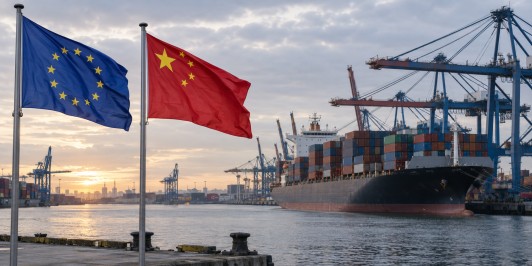
The European Union’s burgeoning trade imbalance with China has become a focal point in the bloc’s economic discourse, as new data underscores a significant disparity in goods exchange. According to Eurostat, the EU’s trade deficit with China swelled to €36.5 billion in July 2026, with imports from the Asian giant nearly tripling exports.
July’s figures reveal that EU imports from China rose by 8% compared to the previous year, reaching €53.9 billion. Meanwhile, exports to China saw a slight decline of 1.6%, totaling €17.4 billion. This monthly deficit has increased from €32.3 billion reported in July 2025, marking a consistent trend of widening gaps over the past year.
From January to July 2026, the cumulative trade deficit with China has amounted to approximately €234 billion. This ongoing imbalance has prompted European officials to consider strategies aimed at recalibrating the economic relationship. Among the measures under consideration are potential import restrictions in targeted sectors such as hybrid vehicles and chemicals.
The surge in imports of hybrid vehicles from China follows the EU’s imposition of additional tariffs on Chinese electric vehicles in 2024. These tariffs have led to a shift in trade dynamics, as hybrid models are subject to different tariff treatments. In response, EU officials have been exploring voluntary export limits from China as a means to alleviate trade tensions.
As the EU seeks to bolster its own export levels and lessen reliance on Chinese imports, these trade issues are expected to take center stage in forthcoming discussions between Brussels and Beijing. The goal is to achieve a more balanced economic exchange, particularly in strategic sectors that are crucial to Europe’s economic interests.